Jun 22, 2026 | Issue 56
Created by Sam Rogers, building PAICE.work | Freely available on Substack and LinkedIn | New issue every Monday
🔭 Signal: The Confident Wrong Answer
A team wires up one of those AI tools that indexes your whole codebase so assistants can answer questions about it in seconds. First real test, someone asks a normal cross-cutting question about “middleware.” The tool answers in one shot. Crisp. A specific file, a specific line. Full conviction.
The answer is wrong. Not vague, not hedged, not “I’m not sure” wrong. Authoritatively and very precisely pointing at the wrong thing.
Yet the tool did not malfunction. One ordinary word in that codebase named four unrelated systems. One word, zero signal about which was which. The tool picked one, the way anyone would when a label looks definitive, and reported it with all the authority the word seemed to carry. The slow method, a human reading the actual files, got it right.
Here is what is new, and why this issue is not last year’s “define your terms” lecture. For years, your overloaded words were survivable because a human on the other end carried the missing context in their head. They knew “middleware” meant the billing one in this hallway. AI carries none of that. It reads your names across every silo at once, with no intent and infinite confidence, and amplifies your ambiguity into one clean falsehood nobody flags.
The tool didn’t fail your test. It answered the question your names actually asked.
➖ Subtraction: Stop Disambiguating, Start Removing
The reflex is to add context: write a glossary, append a note, qualify the word so the tool guesses better. That was the right move when the reader was human. It is the wrong move now. Context piled on top of a bad name is just more surface for a machine to misread.
The subtraction is the word itself.
Pick your single most-reused ambiguous word. Do not explain its multiple meanings. Give each meaning its own distinct term that appears nowhere else, and then, most importantly, retire the original. Mark it deprecated in a way both sides catch on sight: machine-readable for the tools, obvious enough that a person flags it too.
Make this measurable now:
- Name the word and list its distinct meanings.
- Give each meaning a unique replacement.
- Count today’s occurrences of the old word. That number is your baseline: replace each use with the precise name for the meaning it actually carried, until the overloaded word is gone and every meaning has a name of its own. (Count only falls.)
A cleanup with a number attached is a project. A cleanup without one is a wish.
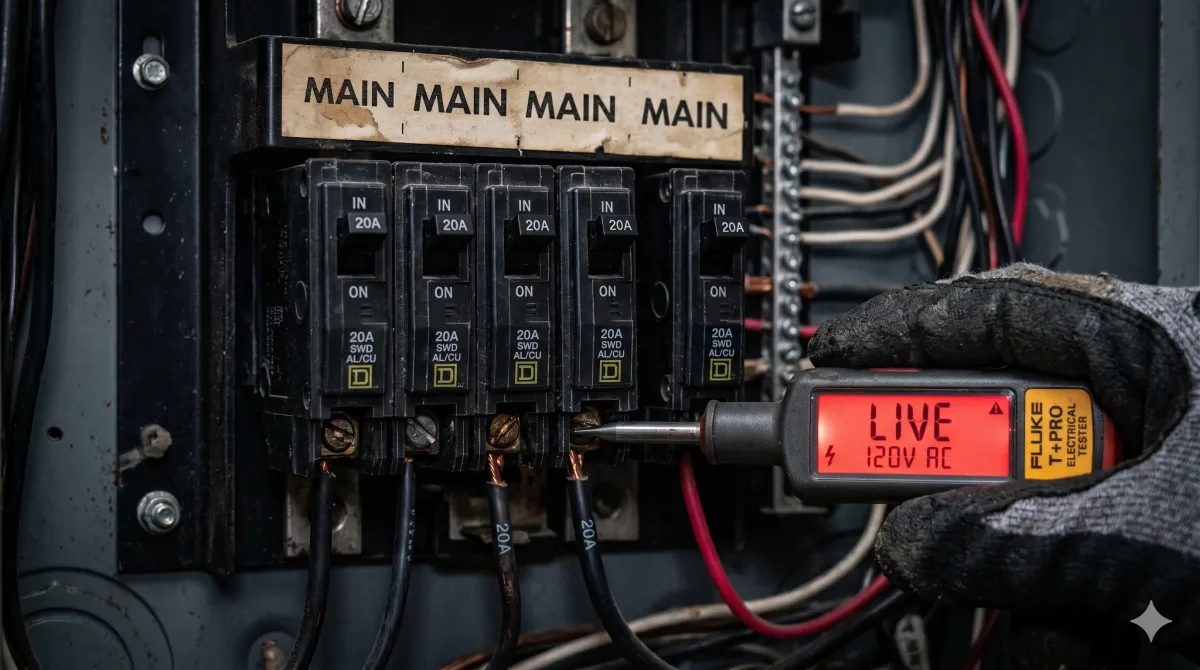
⚡ Analogy of the Week: Four Breakers, All MAIN
A name that points at everything points at nothing.
My brother-in-law Kip is an electrician. He lives the version of this where getting it wrong means an impromptu shock treatment.
Open an old panel. Four breakers. Every one labeled, clear as day: “MAIN”. The crew is on the clock, other circuits live, and he needs to kill exactly one to work a wire safely. The labels are not missing here. They are confident. Does he read MAIN, flip it, and reach for the wire?
Oh, let’s hope not. The label told him nothing, because it told him the same thing four times. The circuit he wants to touch is still hot, and nothing warns him, because the panel looks fully documented. Confident, fast, wrong, with the meter still reading live.
 stay safe out there, Kip.
The cost of a bad name doesn’t show up when you write the label. It shows up when someone trusts it. This was true before AI, it’s just more true and even greater scales with AI now.
🎵 Closing Notes
Vocabulary debt is the cheapest infrastructure problem you have, and the one nobody ever budgets for. It hides because the code runs, the docs read fine, and humans quietly route around it using context the system cannot see. Hand those same names to a machine, and the debt finally comes due.
You do not fix this by buying a smarter tool. You fix it by making your names mean one and only one thing each. Every tool you adopt after that gets better for free, and so do the people.
This is the small end of something I keep circling: the closer your words get to one name, one meaning, the better both machines and humans run on them. (More on this thread coming soon.) But you don’t need a new language to start.
If you want the discipline underneath the cleanup, Knowledge-as-Code is the practice of writing what your org knows so a machine reads it the same way every time. Same instinct as the breaker panel: one label, one circuit, no guessing.
Pick the word. Count it. Split it, so each meaning stands alone. Thankless, boring, and critical for all the work that follows.
Until next Monday,
Sam Rogers Org Electrician