May 25, 2026 | Issue 52
One signal 🔭 One subtraction ➖ One analogy 🎭
Created by Sam Rogers, building PAICE.work | Freely available on Substack and LinkedIn | New issue every week
🔭 Signal: Formatted to Look Done
Last week I tested a new code-indexing assistant on one of my codebases. When I asked it about “tokens” I had something very specific in mind. It answered in one shot, crisp, with a specific file and line. That answer was wrong. Not vague, not hedged, not “I’m not sure” wrong. Authoritatively pointing at the wrong file with full confidence.
The new tool hadn’t malfunctioned, it answered the question the names actually asked. A slower method, brute-force reading the actual files, got it right. I hadn’t stopped to consider that the codebase uses “token” terminology for four unrelated systems: a purchased pass, a cohort seat, a session key, a login link. The AI didn’t either. It merely produced work that was formatted to look done. If I was on deadline, I might not have noticed this.
This is not a code story, it’s a verification story. Substitute “legal memo” or “financial model” or “marketing brief” for “code” and the problem is identical. The resulting organizational wound is also about the same.
In modern office work, two people own different halves of this question. If you ship work that contains unverified AI output, let’s be honest: you did not meet the deadline. You created a future problem that will cost more time and more embarrassment than the extension would have.
If you set a deadline that only works when someone skips verification, you are not buying speed. You are purchasing debt in your team’s name, and it comes due later, with interest. Murphy has a law about this, so it usually comes due in front of a client.
“On time” and “ready” are different words.
➖ Subtraction: Decoy-only Margins
Stop counting “the AI shipped it” as a closed loop. The loop closes once someone has traced the claim to a source, run the code, and confirmed the result. If the answer is no, the work isn’t done, it’s just formatted to look that way. The deliverable is a decoy.
The subtraction is the deadline itself when it has zero verification budget baked in.
Make it measurable this week:
- Pick one deadline on your calendar that depends on someone skipping the check.
- Two real choices: add verification time and move the date now, or reduce the scope today so that the needed verification fits.
- Anything else is debt accumulation with your name on the loan.
Verification isn’t a vibe check, it’s this: did someone trace the claim to a source, run the code, confirm the number? If the answer is no, the schedule itself is the defect. Different problem. Bigger problem.
🎭 Analogy of the Week: Places Everyone! Places!
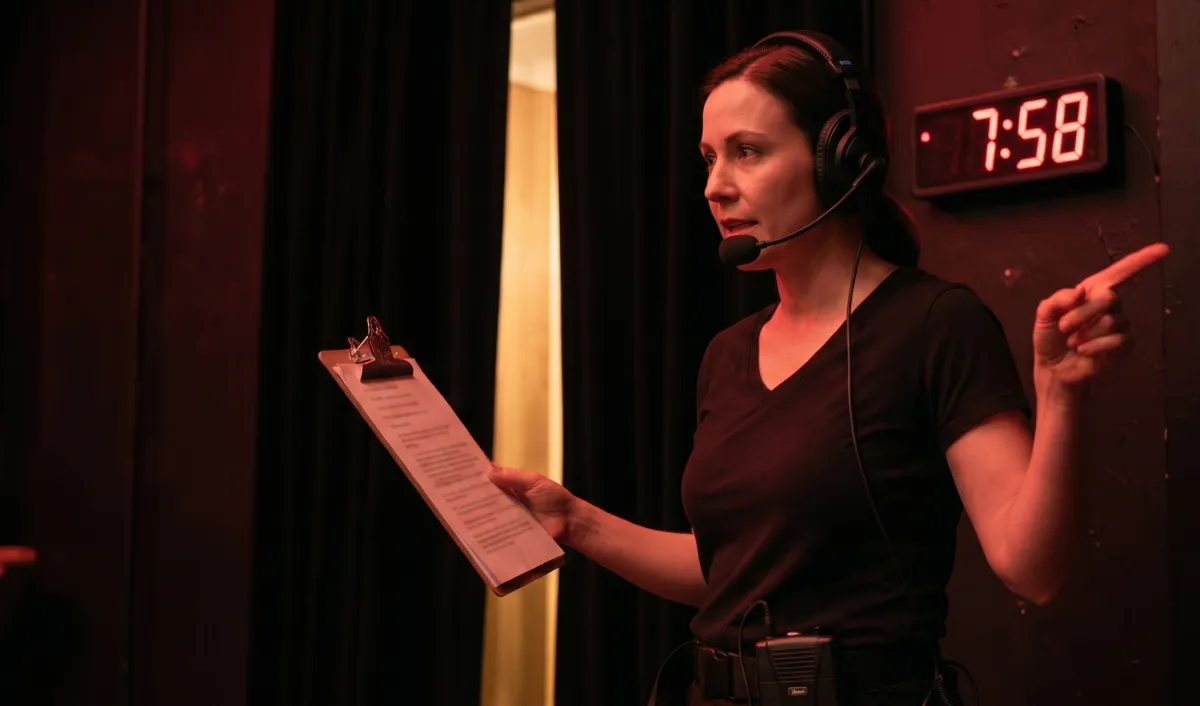
The clock says 7:58 PM. The curtain doesn’t move until everyone is ready.
The stage manager doesn’t call “places” because the clock says 7:58 and showtime is 8:00. They call it when they have walked the deck, checked with front of house, confirmed with the tech crew, and validated every actor is in the building and in costume, and it’s two minutes to curtain.
The stated show time is not the trigger. Readiness is.
Your deadline is the clock. The AI handed you output. Neither of those is “places, please.” Someone has to walk the deck. Someone has to confirm the actors are real. Someone with a radio makes the go/no-go call.
When the curtain goes up before readiness is confirmed, the audience finds out at the worst possible moment, and so does everyone backstage. The cost of going early is paid in public, not in the rehearsal room.
The clock doesn’t open the curtain. The readiness check does.
🎵 Closing Notes
Today marks one full year of these, every week. Thanks to readers who shared what they want more of in future issues. That input is the reason the format and focus tightened these past two issues. More tightening ahead, and please keep that feedback coming!
Two quick questions, reply if you have a minute:
- What’s your role, what do you do?
- Which job has this newsletter helped with: showing progress, avoiding pitfalls, both, neither, or something else?
Single-sentence replies are perfect. The reason I’m asking is that year two sharpens around your answers.
The clock doesn’t care if you’re ready. But I do.
Until next week,
Sam Rogers Calling the Cues
GuideCheck is the new opensource tool/standard that makes the guide a human reads identical to the one their AI executes. One plain file, no hidden text, verifiable in full before it runs. If verification is the discipline, the artifact has to actually be the artifact. At least those kinds of decoys are a solved problem now.