Apr 21, 2026 | Issue 47
One people prompt 🧠
🔭 Signal: The Connectivity Stack Is Already Built
David Soria Parra, MCP co-creator, at AI Engineer Europe this week: “2026 is the year agents go to production.” Not a prediction. A schedule, from the person whose protocol hit 110 million SDK downloads per month in its first year.
!2026-agents-in-production.png
Most of that scale is invisible. Same guy at the MCP Dev Summit days earlier: behind every corporate firewall, teams are quietly wiring MCP to Salesforce, Jira, internal wikis, Snowflake, HR systems. Not on Hacker News. Already load-bearing.
The question is no longer “will the protocol work?” It’s “what breaks when you scale it?” Retries. Observability. Backpressure. Coordination between agents hitting the same services. These are the gaps Parra named, and they’re what separate a pilot from production.
His stack for 2026 agents: Skills + MCP + CLI composed together. Each covers what the others leave out. The “pick one” debate is already over for anyone shipping at scale.
The question isn’t whether agents are ready for production. It’s whether your production is ready for agents.
🧠 Strategic (Human) Prompt: What’s Your Connectivity Stack?
Instead of asking: Which AI tool should we standardize on? Ask: Do we actually have a connectivity stack, or just a collection of tools?
There’s a fast way to tell. Grab a colleague. See if the two of you can name, in under a minute, which part of your AI setup handles skills, which part handles protocol, and which part handles fallback when either breaks.
If you can’t, that’s the signal. You don’t have a stack yet. You have shelves.
➖ Subtraction Opportunity: Stop Treating Protocols as Products
Most orgs pick one. “We’re an MCP shop.” “We’re doing Skills.” “We built our own.” That’s protocol-as-product thinking, wrong altitude, wrong category.
Three subtractions to test:
- The “pick one” reflex. Skills, MCP, and CLI compose. Teams forcing a single-protocol standard are optimizing for the wrong century.
- The “dump all tools in context” default. Progressive discovery is the new baseline. If your agent sees 50 tools on every request, you’re leaking capability and cost.
- The adoption-equals-readiness mistake. 110 million downloads a month is adoption. What breaks at scale (retries, observability, backpressure) is readiness. Different things.
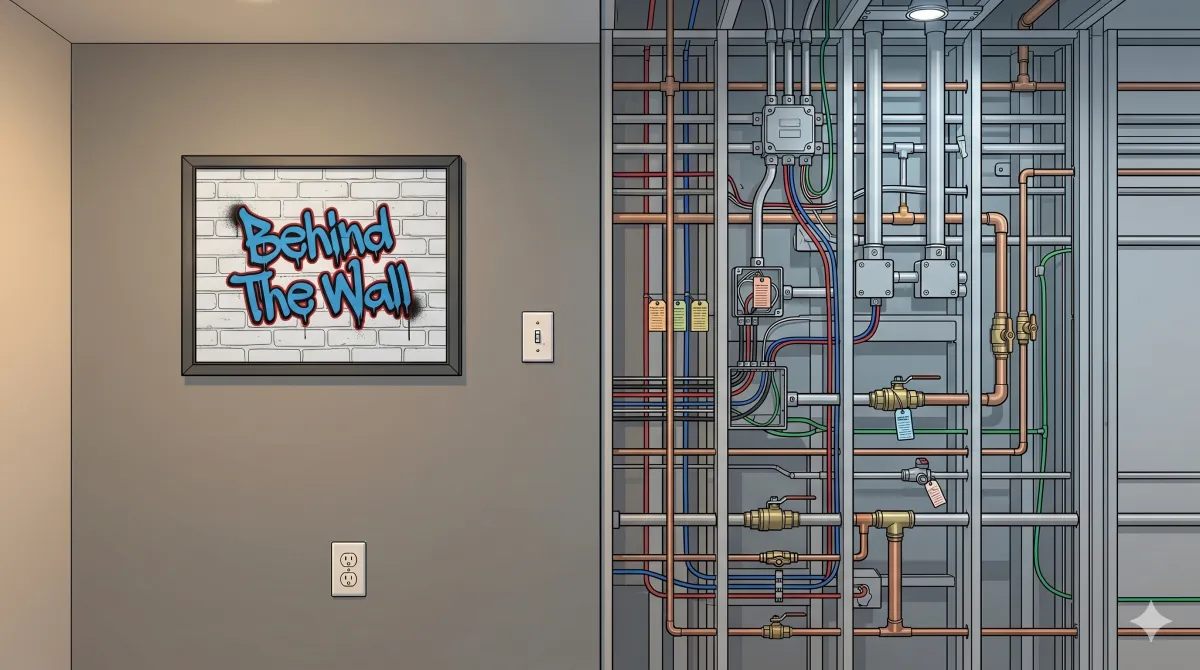
🛠️ Analogy of the Week: Behind the Wall
Walk into any building put up in the last century. You see faucets, switches, outlets, thermostats. You don’t see what’s behind the wall: the copper, the conduit, the junction boxes, the shutoff valves, the inspection sign-offs that made each connection legal to live with.
The fixtures get talked about. The plumbing makes the fixtures work.
MCP at 110 million downloads a month is plumbing. Skills are plumbing. Progressive discovery is plumbing. You don’t see it on Hacker News because plumbing isn’t a story until it fails, and then it’s the only story.
Every building code was written after somebody’s wall burst. The agentic web is being built live, right now, and the codes are being drafted by the people who notice what breaks first.
The fixtures get the credit. The plumbing gets the load.
♬ Closing Notes
Parra’s 2026 agent needs five things: skills that compose, protocols that govern, fallbacks where the protocols don’t reach, progressive discovery that keeps context clean, and graceful failure when any of it breaks. Here’s some of what I’ve been building in the open against each, months before this keynote:
- Skills that compose → Skill Provenance. Versioning and lifecycle for skills so they stay trustworthy across deployments.
- Protocol governance → Graceful Boundaries. How services communicate limits to agents. The structured “why” behind a refusal, not just the “no.”
- Peer coordination → Turnfile. Consent-based protocol for agents collaborating without a central orchestrator. Because Parra’s “coordination between agents hitting the same services” needs a shape.
- Identifier safety → HardGuard25. Human-safe token alphabet. Small piece, load-bearing when it matters.
- Readiness validation → Siteline. Checks whether your infrastructure can actually host what you’re about to deploy.
Five working implementations, offered as proposals. Not competing specs. Reference implementations that say here’s what I needed, here’s what works, take it or leave it.
If you’re looking at the connectivity stack and wondering what’s missing on your side of the wall, Siteline.to is where to start.
Until next week,
Sam Rogers Plumbing Inspector Snap Synapse – from AI promise to AI practice
📅 Book a meeting Before the load test finds you: siteline.to