Apr 6, 2026 | Issue 45
One people prompt 🧠
🔭 Signal: The Gap Nobody Owns
Right now, somewhere in your organization, four different teams are managing four different slices of AI risk. And probably none of them are talking to each other yet.
Compliance is tracking regulations. They’ve got a spreadsheet, maybe a dashboard, mapping the EU AI Act and whatever your state legislature passed last quarter. Top down.
IT and security are hardening infrastructure. Can your systems handle AI agents browsing your site, pulling data, transacting on behalf of customers? Bottom up.
Sales and marketing are fielding questions from the outside. Customers want to know your AI posture. Partners want proof. Prospects are evaluating whether your digital presence even works with the AI tools they’re using. Outside in.
And somewhere in HR or L&D, someone is running a survey. “How comfortable are you with AI?” They’ll call it a readiness assessment. It isn’t one, it’s just a glorified poll. It tells you what people think or feel about AI, but nothing about what they do with it. Inside out.
Four directions. All real. All necessary. All disconnected.
Here’s what happens: Compliance documents that you’re meeting regulatory requirements, but the documentation is based on policy (not behavior). Infrastructure hardens systems to standards that haven’t been mapped to regulatory obligations yet, because nobody connected those two conversations. Sales tells prospects you’re AI-ready but can’t point to a single unified measure that backs up that claim.
Each team is doing real work. But your organization’s actual AI posture isn’t captured in any one of those efforts. And nobody owns the whole picture.
The board isn’t going to ask four teams four questions. They’re going to ask you one: “What’s our AI exposure?” So far, most organizations don’t have a defensible answer.
🧠 Strategic (People) Prompt: Who Owns the Whole Picture?
Ask your leadership team this week:
If a regulator, a board member, and a prospective client all asked “What is your AI posture?” on the same day, would they get the same answer?
Follow up with: Who in the building is responsible for making sure they would?
If the answer is “nobody” or “it depends on which team they ask,” congratulations! You’ve found a valuable gap to work this week.
➖ Subtraction Opportunity: Subtract the Illusion of Coverage
Stop treating each team’s AI work as if it covers the organization.
Right now, compliance thinks risk is handled because they’ve mapped the regulations. IT thinks risk is handled because they’ve hardened the systems. HR thinks readiness is handled because they ran the survey. Sales thinks the story is handled because they updated the pitch deck.
Each one is right about their slice. Each one is wrong about the whole.
This week, try one thing: put a representative from each of those four directions in the same room for 30 minutes. Not to align on strategy. Just to answer one question: What does each of us believe we’ve “covered,” and what falls between us?
The gap between those answers is your actual exposure. Prioritize topics with volume levels in excess of 50db.
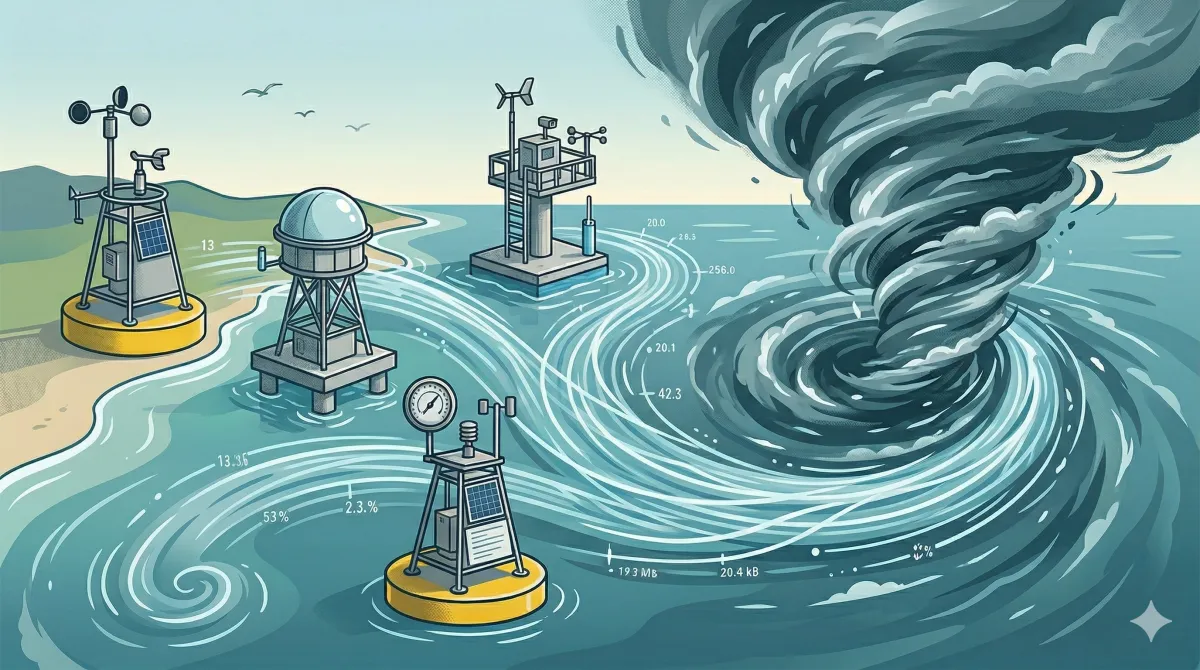
🌊 Analogy of the Week: Four Weather Stations, One Coastline
Imagine four weather stations along a coastline. One measures wind speed. One tracks water temperature. One monitors barometric pressure. One watches tidal patterns.
Each station produces accurate data. Each one publishes its own forecast for its own metic. On any given day, each forecast is defensible on its own terms.
But storms don’t form in any one variable. They form between them and then that impacts the metrics. The dangerous conditions emerge where warm water meets dropping pressure meets shifting wind meets rising tide. No single station can see that pattern. And by the time any one of them raises the alarm, the storm is already forming.
Your organization’s AI risk works the same way. The danger isn’t in any single vector. It’s in the convergence that nobody is watching.
♬ Closing Notes
The skills arc (issues 041-044) explored how the language of capability is changing. This week’s signal is what happens when you try to govern that capability without a shared view.
Most organizations are managing AI risk in parallel lanes that don’t merge. Compliance tracks the laws. Infrastructure hardens the systems. HR surveys the people. Sales tells the story. But the actual exposure, the gap between what each team believes is “covered” and what actually is, belongs to no one.
Colorado’s AI Act is likely changing in a big way, but is still slated to take effect this quarter. The EU AI Act’s high-risk system requirements land August 2. Multiple state laws are already enforcing. The regulatory landscape isn’t slowing down, and “our legal team is keeping an eye on it” is not an answer your regulator will accept.
If you’re not sure which AI laws apply to your organization right now, specifically, by jurisdiction, by provision, by deadline, that’s the regulation gap. And it’s getting wider every quarter.
EveryAILaw.com tracks AI regulation across jurisdictions globally, structured so you can find what applies to you, not just what exists in the world. It’s live, it’s free, and it’s agent ready. I built it because I needed it too.
Until next time,
Sam Rogers Posture Gap Chiropractor Snap Synapse: from AI promise to AI practice